Tags :: Dystopian

Two things I wish George Miller had done differently in Furiosa: A Mad Max Saga
The Fury Road prequel is a satisfying return to the world of the demented 2015 film—but there were two missed opportunities, relating to Immortan Joe’s Wives and Furiosa’s revenge.

Furiosa tells the story of a world (almost) without hope
Is there no hope? This desperate question hangs over the previous film in the saga, Miller’s 2015 extravaganza Mad Max: Fury Road. Now, the same question haunts Furiosa, an epic origin-story prequel for Fury Road’s stealth protagonist, Charlize Theron’s Imperator Furiosa.
![The Darkest Minds [video]](/uploads/articles/darkestminds-vid.jpg)
The Darkest Minds [video] (2018)
The Hunger Games’ Rue is now Ruby: Amandla Stenberg takes the spotlight in another YA dystopia that runs its race, but doesn’t diverge enough from its peers to leave anyone hungry for whatever comes next.

“We are not things”: Mad Max: Fury Road and commodifying human life
In another movie, a line like “We are not things” could be a platitude, but in the context of vividly imagined atrocities with unnerving echoes of recent headlines, this simple affirmation is fraught with topical power that has only grown in the months since the film’s theatrical debut.
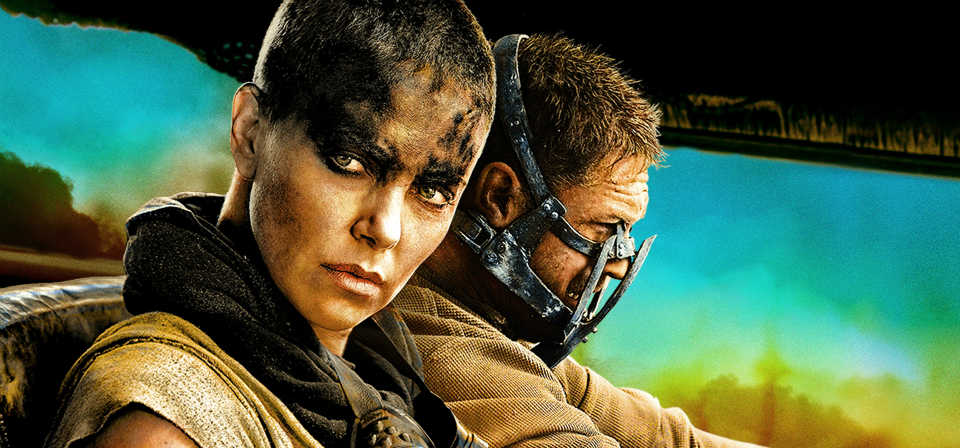
Mad Max: Fury Road (2015)
In the first act of Mad Max: Fury Road, Tom Hardy’s Max spends more time than you might expect strapped helplessly to the front of a turbo-charged Chevy coupe, maniacally driven by a fanatic through a hellish landscape, an unwilling witness to the chaos ensuing around him. Sitting in the theater, I felt about the same way, I think.
The Hunger Games: Mockingjay – Part 1 [video] (2014)
Katniss Everdeen may be the Mockingjay now, but Jennifer Lawrence is still the girl on fire.
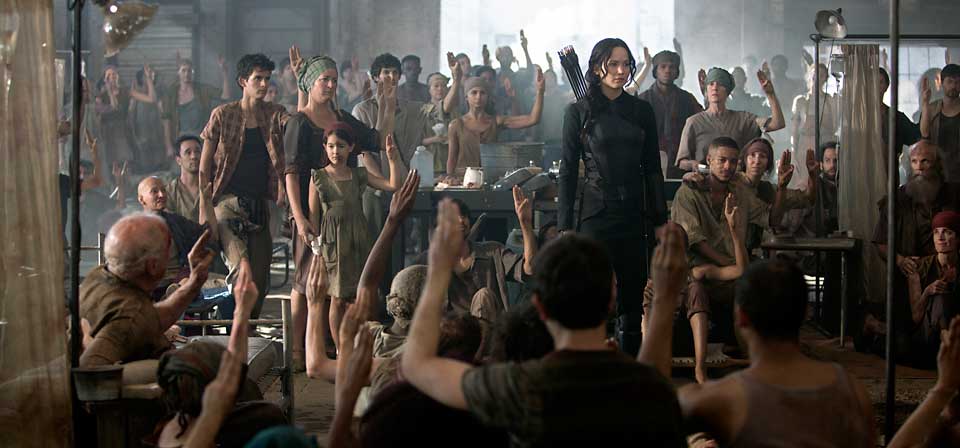
The Hunger Games: Mockingjay – Part 1 (2014)
Propaganda and symbolism have always been a crucial weapon in the arsenal of any campaign, but their value increases exponentially in the information age. This isn’t a particularly radical idea, although this may be the first time it’s trickled down into a blockbuster franchise. Can you imagine Luke Skywalker making subversive videos calling out Darth Vader and coining popular slogans about fighting the Empire?
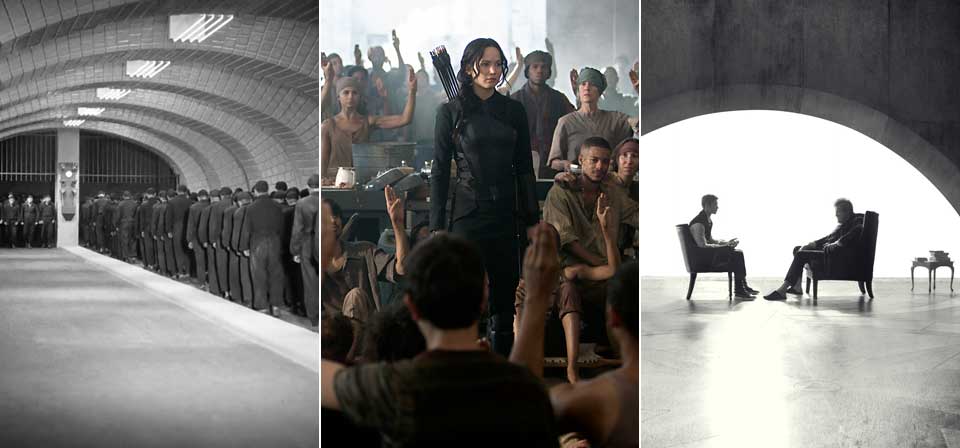
Dystopia, The Hunger Games and the critique of the culture of death
The word utopia was coined by St. Thomas More in his book of that name — an important and enigmatic work of fiction and political philosophy generally understood as some sort of satire.
Snowpiercer [video] (2014)
This is the summer’s most thought-provoking action movie.
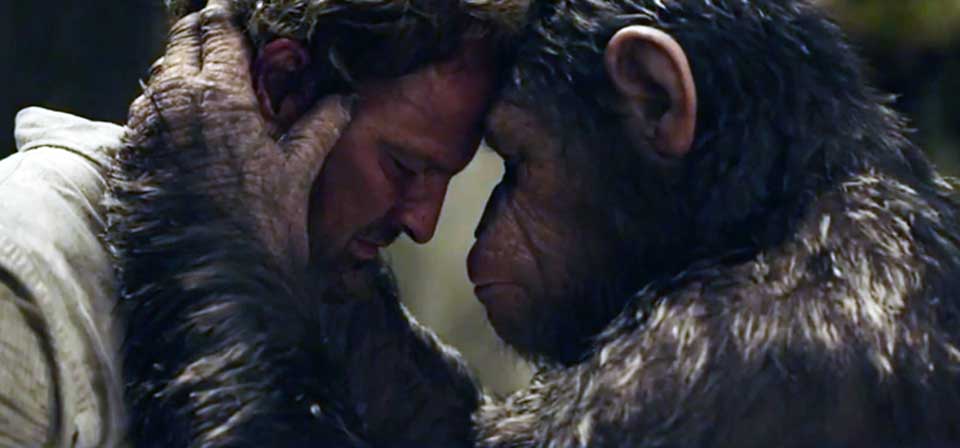
Dawn of the Planet of the Apes (2014)
Wait, where did this movie come from? Dawn of the Planet of the Apes is so not the sequel to Rise of the Planet of the Apes I expected or was prepared for.
Father Barron on ‘Noah’! Catholic Culture! More!
Father Robert Barron is one of the Church’s best commentators on popular culture today, so I’ve been waiting for his take on Darren Aronofsky’s Noah. He doesn’t disappoint.
Everything SDG on Noah: Vatican Radio, NBC News, EWTN News Nightly & more!
This has been a crazy week! I was interviewed about Noah for Vatican Radio, the NBC News website, EWTN News Nightly, Kresta in the Afternoon and The World Over.

Noah: A theological reflection
“Let me tell you a story,” Russell Crowe’s Noah says to his family in a moment of great crisis and emotion. “The first story my father told me, and the first story I told each of you.” What he recounts are the events of Genesis 1, the creation of the world; and Aronofsky relates them both verbally and visually in a way that bespeaks a confidence in the power of this story to speak to us today: a story still worth telling and retelling.
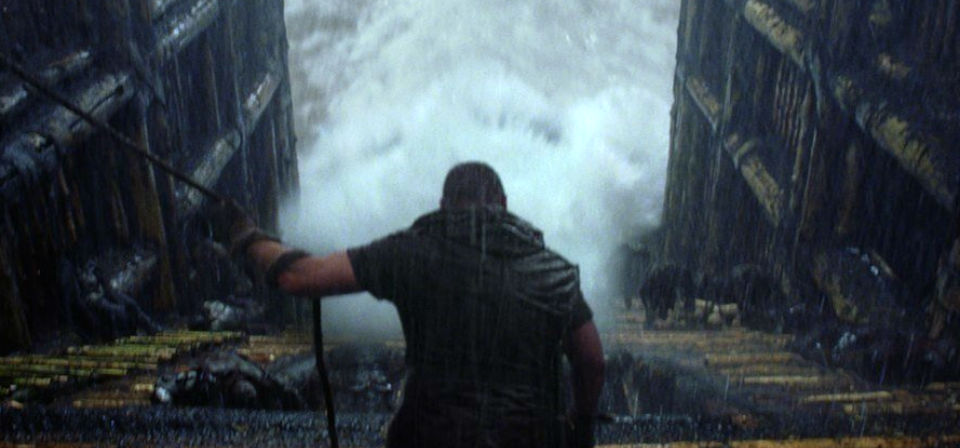
The Noah controversies: questions and answers
The punning headlines write themselves: “Noah Awash in Flood of Controversy.” “Deluge of Criticism Inundates Filmmakers.” In the weeks preceding the release of Noah, controversy has swirled around the film — and will no doubt continue to do so in the weeks ahead.
Noah [video] (2014)
The first major big-studio Bible film in decades is a dark, divisive, personal film from the director of Pi, The Fountain and Black Swan.
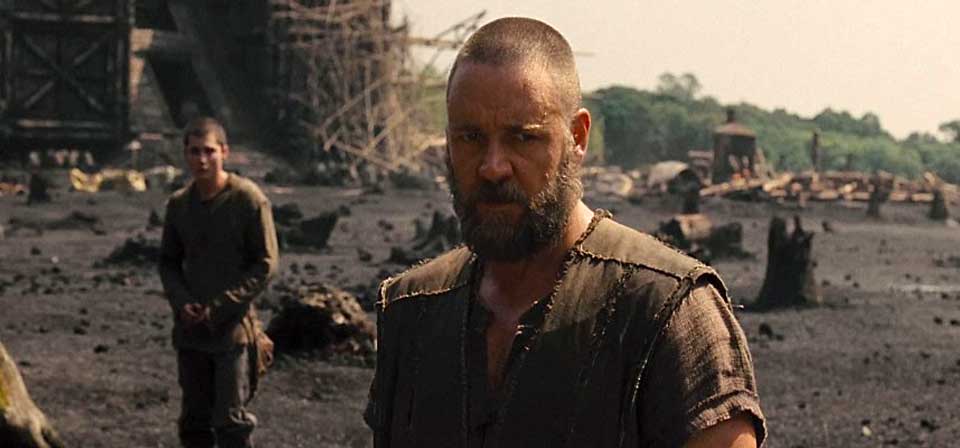
Noah (2014)
Darren Aronofsky’s Noah pays its source material a rare compliment: It takes Genesis seriously as a landmark of world literature and ancient moral reflection, and a worthy source of artistic inspiration in our day.
Elysium [video]
The director of District 9 is back … with a bigger budget and name stars.
Big Brother on the Big Screen
Have Hollywood movies been softening us up for NSA-style surveillance?
World War Z [video]
It’s the end of the world was we know it … again. World War Z: my “Reel Faith” 60-second review.
The Hunger Games (2012)
Suzanne Collins says she got the idea for The Hunger Games while sleepily flicking channels between some reality-show game and footage of the invasion of Iraq until the images began to blur in her mind. What’s bracing about Gary Ross’ film of the first book in Collins’ wildly popular young-adult trilogy is that the topicality of the story’s origins still comes across. When was the last Hollywood science-fiction action blockbuster that felt like actual ideas about the world we live in were at stake?
John Carter [of Mars] (2012)
Burroughs didn’t invent science fiction, but he perhaps created a genre of serial sci-fi fantasy adventure, with an idealized action hero going from one extraterrestrial adventure to another. Carter’s closest literary ancestor may be Sinbad from One Thousand and One Nights, which is saying something. Buck Rogers, James Kirk and Luke Skywalker are all his descendants, and Jake Sully — the hero of Avatar, which really is a patchwork borrowing from everything Burroughs inspired — is perhaps more indebted to John Carter than any other character in history.
In Time (2011)
Niccol imagines a dystopian near future in which Benjamin Franklin’s adage that “Time is money” is taken to a literal extreme. Human beings are genetically engineered to stop aging at 25, but they also come equipped with a literal biological clock, complete with digital readout on their forearms, that activates at 25 and begins counting down to zero.
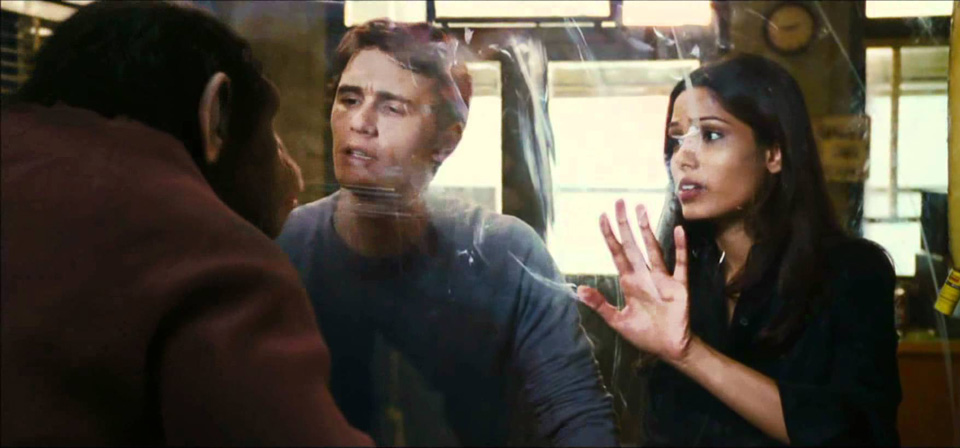
Rise of the Planet of the Apes (2011)
Rise of the Planet of the Apes is a smartly made, effective movie — but what sort of movie is it, exactly?
Priest (2011)
Director Scott Charles Stewart seems to be making a career out of erasing Jesus from history, and celebrating supernatural heroes who rebel against God for the greater good … in apocalyptic action/horror movies starring Paul Bettany.
9 (2009)
I don’t want to be too hard on 9. It’s the first film of a director who shows some promise, and a bravely idiosyncratic vision free from commercial pandering. It will probably fade quickly at the box office while soulless marketing machines like G. I. Joe and Transformers slog on and on. But Acker does himself no favors with rote anti-dogmatism and vapid characterizations.
District 9 (2009)
C. S. Lewis’s bleak prediction about human mistreatment of extraterrestrial creatures was framed in terms of human spacefarers encountering alien life on distant worlds, but the gist of his thesis is eminently applicable to the scenario proposed in District 9, a caustic and gory but sharply made sci-fi fable with a pungent South African flavor.
The Day the Earth Stood Still (2008)
I don’t object in principle to Keanu–Klaatu’s message. It’s just not a very interesting or enlightening thing for an ambassador from the universe to say. It’s sort of a letdown, not unlike like having the pope show up at your house only to check the batteries in your smoke detectors. There’s nothing wrong with that. You just hope he has more on his mind.
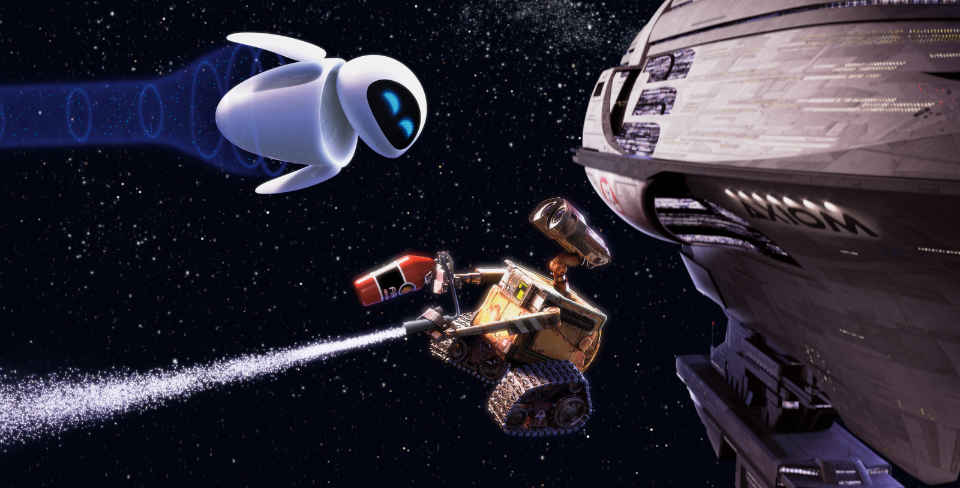
WALL•E (2008)
Even Pixar has never attempted anything on a canvas of this scale. From Monsters, Inc.’s corporate culture to Finding Nemo’s submarine suburbia, previous Pixar films have never strayed too far from the rhythms of real life. … WALL‑E creates a world that, despite clear connections to contemporary culture, looks and feels nothing like life as we know it, with unprecedented dramatic and philosophical scope.
Sunshine (2007)
For an hour or so it threatens to be one of the best movies of the year, but in the end, despite sci‑fi razzle-dazzle and some undeniably powerful images, Sunshine ultimately settles for puzzling rather than mysterious.
Children of Men (2006)
It is a truism that every childbirth is a miracle. Children of Men sets that truism in sharp relief, envisioning a world in which a single ordinary conception, pregnancy and childbirth seems almost as miraculous — and portentous — as a virgin birth.
V for Vendetta (2006)
Fans and philosophy students endlessly debate whether the world of The Matrix is most influenced by Eastern mysticism or Cartesian philosophy, Christianity or gnosticism, humanism or post-humanism. No such debates will be occurring over V for Vendetta, which weighs down what could have been a thought-provoking dystopian scenario with leaden specificity and sanctimonious ideo-political commentary.
Serenity (2005)
For long-suffering “Firefly” fans, Serenity is at last a precious opportunity to find out what happens next, not to mention to learn the answers to nagging questions left hanging by the series’ abrupt demise — a journey that is at once thrilling, rewarding, heartbreaking, and wistful. For non-fans, Serenity is a delirious excursion into a world whose setting, characters and relationships are richer and more elaborate than any one-shot movie is likely to be.
The Island (2005)
The Island is the closest thing so far to a good Michael Bay film. Damning with faint praise, yes — but bear in mind that most of Bay’s filmography to date (Armageddon, Pearl Harbor, Bad Boys and Bad Boys II) deserves to be damned with loud damns. So let me repeat: The Island is Bay’s best film to date, and Bay’s best effort to date at a meaningful, thoughtful film.
War of the Worlds (2005)
Individual set pieces are riveting, and one seldom doubts that if alien tripods were actually wreaking havoc on the Earth, this is indeed very much what it would be like. Afterwards, though, one is left with little more than ashes.
Planet of the Apes (1968)
Adapted by Rod Serling from Pierre Boulle’s Swiftian social satire, Planet of the Apes is basically a feature-length "Twilight Zone" episode, with all that that implies for good and ill. There’s an ironic sci-fi reversal of real-world conditions, a rather thin plot padded to fill out the running time, heavy-handed but sincere allegorical moralizing, thought-provoking social satire, and a stunningly imagined climactic twist.
Metropolis (1927)
Surreal, sprawling, and operatic, drawing on biblical and medieval Christian imagery as well as H. G. Wells’s The Time Machine, Fritz Lang’s deeply influential pulp allegory Metropolis colonized a new realm of the imagination that has shaped subsequent science fiction from Flash Gordon to Star Wars, from "The Jetsons" to Blade Runner.
The Matrix Reloaded (2003)
Morpheus’s expository speech to Neo in the first film about the history of the power behind the Matrix — particularly the bit about the solar issue and the moment when he holds up the battery — is both the least persuasive and the least interesting thing about the film. It’s a perfunctory plot-level explanation that one accepts for the sake of the action and the hero’s journey, not something one particularly cares about for its own sake.
The Matrix Revolutions (2003)
Beyond that, unlike Reloaded, which featured an impressive but hardly groundbreaking freeway chase scene as its biggest set piece, Revolutions has startling new sights to offer, notably a spectacular siege scene that recalls the first act of The Empire Strikes Back with its Walker attack on the Hoth Rebel base. In fact, The Matrix Revolutions arguably had the potential to be the Empire Strikes Back to The Matrix’s Star Wars, had the Wachowskis not squandered that opportunity six months ago with Reloaded.
The Matrix (1999)
Be that as it may, scratch the surface of the vast body of commentary and discussion devoted to The Matrix, and you could start to get the impression that Morpheus’s comment is a fairly accurate description of the film itself. The Matrix has been described as everything from a neo-gnostic parable to a Christian allegory, from a strikingly innovative action film to a derivative rip-off of kung-fu clichés and stock anime conventions. Commentators have found influences from Plato and Descartes, Lewis Carroll and Star Wars. At the end of the day, can anyone really say what The Matrix is?
Terminator 3: Rise of the Machines (2003)
Yet against all odds, T3 is a smart, rousing extension of Cameron’s paranoid fantasy that not only meshes seamlessly with the past and future continuities of the earlier films, but actually advances and develops the series’ apocalyptic mythology.
Planet of the Apes (2001)
Helena Bonham Carter is also convincingly simian as the chimpanzee Ari, though less so than Thade, since she has to be visibly feminine and potentially attractive to the human lead (Mark Wahlberg). But the gorillas, like Attar (Michael Clarke Duncan) and Krull (Cary-Hiroyuki Tagawa), are as compellingly realistic as Thade, if not quite as expressive.
Minority Report (2002)
Spielberg has always known how to manipulate an audience’s emotions, a knack he makes effective use of here. Humor alternates with squirming discomfort and emotional release as the director pokes fun of Cruise’s sex-symbol status in a couple of funny incidents, then leaves us wincing with a number of scenes involving eyeballs, or a character fumbling blindly for the one edible sandwich in a squalid refrigerator.
Pleasantville (1998)
The film’s central conceit is that the process of colorization is spread through acts of exploration or self-discovery by which people step outside their customary ways into a new world. In the black-and-white world of the 1950s TV sitcom, one common means of transformation is sexual activity, which didn’t exist in "Pleasantville" until the teenagers (Jennifer in particular) introduced it. When Jennifer gently explains the facts of life to her sitcom mother (Joan Allen), the latter is certain that her prosaic husband (William H. Macy) could never be induced to engage in such activity; so Jennifer proceeds to coach her mother (offscreen) on how to commit self-abuse. The mother then proceeds to do so, with such explosive results that by a kind of sympathetic magic the tree in the front yard bursts into flame.
The Time Machine (2002)
The Time Machine is so sloppy that it makes Kate and Leopold look like Back to the Future. It’s also pitiful entertainment, succeeding neither as spectacle, as action-adventure, or as love story.
Final Fantasy: The Spirits Within (2001)
Based on a computer game, Final Fantasy is always interesting to look at, and is sometimes visually spectacular, but it hasn’t transcended its gaming origins. The sci-fi scavanger-hunt premise hasn’t been fleshed out into a coherent or satisfying story. The heroes, though eye-poppingly rendered, remain emotionally as one-dimensional as any computer-game avatar. Even basic rules and motivations never become clear.
Battlefield Earth (2000)
Here is the closest thing to a positive statement I can make about Battlefield Earth: Although it is an adaptation of a novel by L. Ron Hubbard, the founder of the sect of Scientology - and although it stars John Travolta, one of Hollywood’s most high-profile Scientologists and a long-time champion of this project - Battlefield Earth is not a cryptic tract or allegory of Scientology.
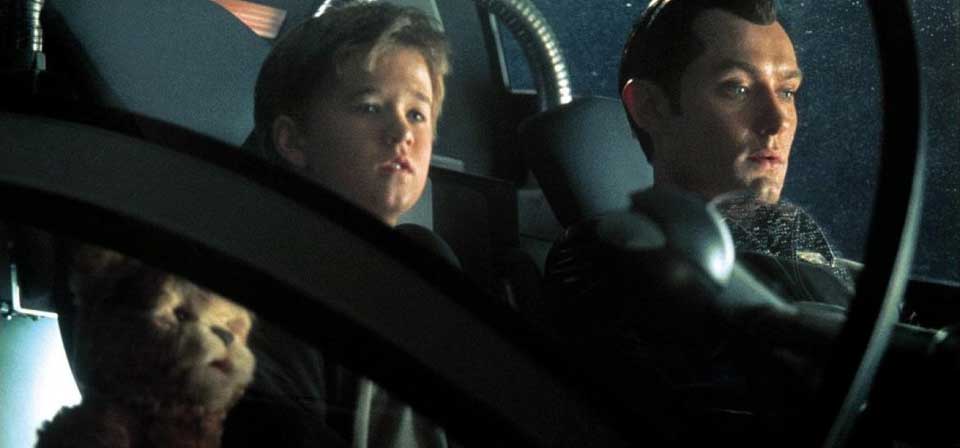
A.I. Artificial Intelligence (2001)
A.I. is a science-fiction fairy tale: a terrible, revisionistic revisiting of "Pinocchio," the story of the little manmade boy who wants to be real — as told by a nihilist who condemns Gepetto for creating Pinocchio, the world for laughing at him, and the Blue Fairy for leading him on when he’s better off being made of wood, which will after all be around long after Gepetto is pushing up daisies.
The 6th Day (2000)
Arnold Schwarzeneggar’s latest vehicle brings us to a rather well-realized, not-too-distant future ("sooner than you think" according to an ominous caption) in which human cloning is possible but forbidden by "sixth-day laws" (so called after the sixth day of creation week in Genesis 1, the day when God created man).
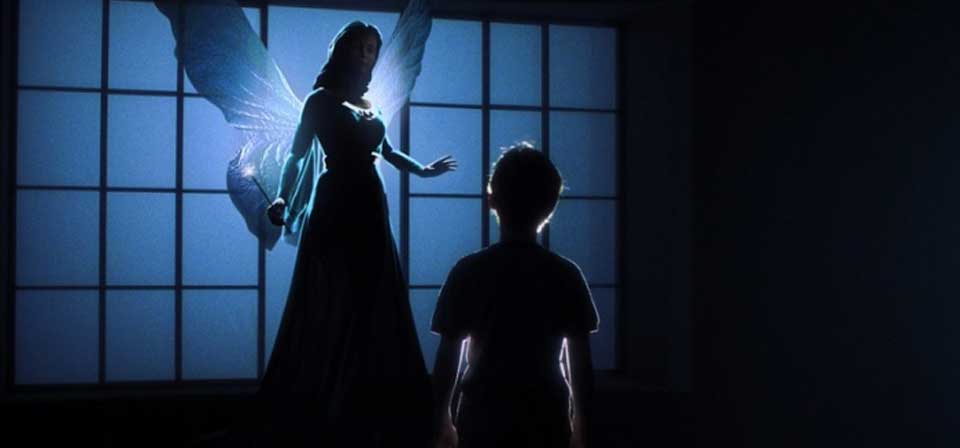
“Is it a Game?” Faith, Despair, and Cosmic Loneliness in A.I. Artificial Intelligence
(Co-written with Chris Otsuki) "Those who made us," Joe explains to David, with a glance at the statue of the Blessed Mother, "are always looking for the ones who made them."
Planet of the Apes (1968)
(Review by Jimmy Akin) Based on a book by French novelist Pierre Boulle, Planet of the Apes is essentially a big-screen version of a Twilight Zone episode (not surprising since Twilight Zone-creator Rod Serling was a co-author of the screenplay).
Recent
- American Martyr: An Oklahoma priest’s unlikely bond with persecuted Mayans in war-torn Guatemala
- Father Stanley Rother’s gift of presence: Interview with María Ruiz Scaperlanda
- The Odyssey and the consequences of war
- Why Doctor Strange is the best MCU movie: 10 reasons
- Aliens, humanity, and God: In Disclosure Day, Spielberg still wants to believe
Home Video
Copyright © 2000– Steven D. Greydanus. All rights reserved.