Articles
Home on the Range: The Last Roundup for Disney Animation?
Is Home on the Range really the final entry in the canon of Disney’s traditional hand-animated feature films — a body of work that goes back to Snow White and the Seven Dwarfs and includes such landmarks as Fantasia, Pinocchio, and Beauty and the Beast?
Quo Vadis Disney? Notes on the End of the Disney Renaissance, circa 2001
The modern era of Disney animated greatness started with a splash in 1989 when the promisingly fresh The Little Mermaid hit theaters. Delighted audiences actually burst into applause at colorful show-stopping musical numbers like the sprightly "Under the Sea" and the enchanting "Kiss the Girl." Coming as it did after a string of uninspired releases (The Fox and the Hound, The Black Cauldron, Oliver & Company), The Little Mermaid set the stage for a creative comeback.
The Passion: Doug Barry of Radix Relives Jesus’ Final Hours
Veteran Catholic performer Barry, who calls his apostolate Radix, has been doing his live one-man passion play for a decade, accompanied for most of that time by his musical partner, Eric Genuis. One recorded version has played for a number of years on EWTN around Holy Week. This version, filmed live in 2003 at the Orpheum Theatre in Memphis, TN, benefits from enhanced production values including multiple cameras.
Watching Silent Movies with Children
The open-mindedness of the young obviously imposes a huge responsibility on parents to watch what their children are exposed to. But it also represents a tremendous opportunity to expose children to valuable and worthwhile experiences that for many of their peers will be lost, possibly forever, by the time they are teenagers.
Judas: Jesus in the Eyes of His Betrayer
The Achievement of Peter Jackson’s The Lord of the Rings
As Fritz Lang’s Metropolis was the first great science fiction film and Ford’s Stagecoach was perhaps the first great Western, The Lord of the Rings is the first great cinematic achievement of its kind - a genre that might be described as epic Western mythopoeia, but is often popularly (if imprecisely) called "fantasy" or "swords and sorcery."
"One Man’s Hero is Another Man’s Traitor"
Even movie-savvy Catholics often haven’t heard of One Man’s Hero, Lance Hool’s 1999 film about the San Patricios, a group of Irish Catholic immigrants in the 1840s who joined the U.S. Army but deserted after suffering religious and ethnic persecution, fled to Catholic Mexico, and wound up fighting on the Mexican side in the U.S.-Mexican War. The film, starring Tom Beringer, never got a proper U.S. theatrical release, and hasn’t been promoted on video and DVD, even in Catholic markets and media.
The Lord of the Rings: Filmmakers Contemplate Journey, Significance of Books and Films
“I think that Tolkien says that some generations will be challenged,” said
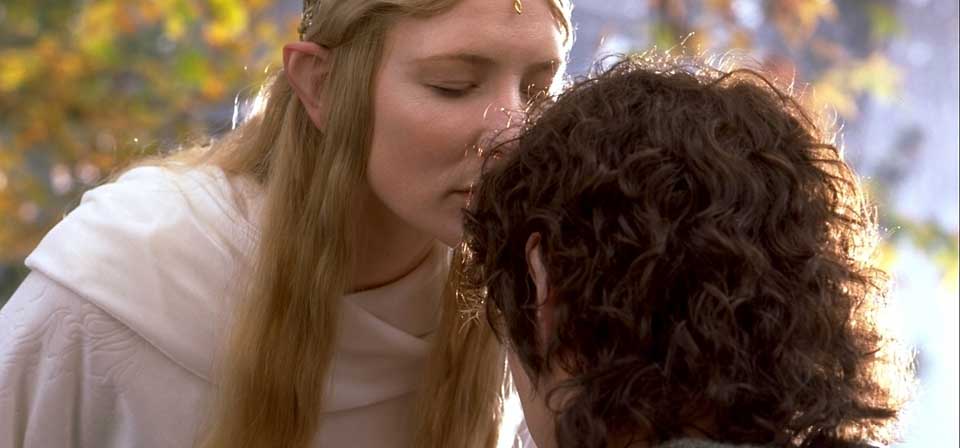
Faith and fantasy: Tolkien the Catholic, The Lord of the Rings, and Peter Jackson’s film trilogy
J. R. R. Tolkien once described his epic masterpiece The Lord of the Rings as "a fundamentally religious and Catholic work." Yet nowhere in its pages is there any mention of religion, let alone of the Catholic Church, Christ, or even God. Tolkien’s hobbits have no religious practices or cult; of prayer, sacrifice, or corporate worship there is no sign.
Peter Jackson’s The Lord of the Rings Film Trilogy: Will it be True to Tolkien?
Yet neither Baum nor even Mitchell ever quite generated the level of intensely passionate fan devotion inspired by J. R. R. Tolkien’s epic masterpiece The Lord of the Rings. This is a fact not lost on New Zealand director Peter Jackson, whose ambitious, unprecedented back-to-back three-film adaptation of The Lord of the Rings launches this December with The Fellowship of the Ring.
The Chronicles of Narnia (1988‑1990)
Beautiful, rugged UK landscapes, splendid old castles and other shooting locations, and some fairly impressive sets help create a sense of authenticity. At the same time, with the earlier episodes especially limited by modest production values, rudimentary special effects, and uneven acting, the Chronicles can’t be held even to the standard of such American TV productions as the Merlin and Arabian Nights miniseries.
The School of Rock vs. The Fighting Temptations
The hero’s nearly religious reverence for rock’s angry posturing and anti-authoritarianism — reverence culminating in a pre-concert prayer to the "God of rock" — isn’t quite condoned, but isn’t put in any larger context either. Rock culture’s darker side is whitewashed (it’s not about drugs, kids, and groupies are really just band cheerleaders!), and subjects other than music (and even music other than rock) get short shrift. Then there’s the swishing, lisping fifth-grade "band stylist" bringing "Queer Eye" camp to the grade-school setting.
Here I Stand: The Good and Bad in Eric Till’s Luther
In one sense, I’d like to see more films like this made. At the same time, Luther is also a seriously flawed film. Relentlessly hagiographical in its depiction of Luther and one-sidedly positive in its view of the Reformation, the film also distorts Catholic theology and significant matters of historical fact, consistently skewing its portrayal to put Luther in the best possible light while making his opponents seem as unreasonable as possible.
Remembering Bob Hope
Seven years ago, after nearly six decades of marriage to an active Roman Catholic, Bob Hope was received into the Catholic Church, and became a frequent communicant. His funeral Mass was celebrated on July 30 at St. Charles Borromeo Catholic Church in North Hollywood, and on Sunday, August 3, he was remembered at a memorial Mass celebrated by Cardinal Theodore McCarrick of Washington, D.C. at the National Shrine of the Immaculate Conception.
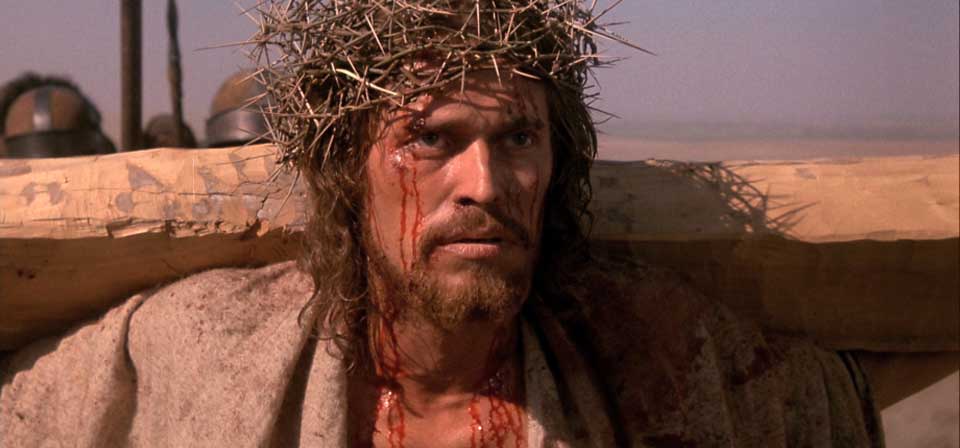
The Last Temptation of Christ: An essay in film criticism and faith
We must not be too quick to judge any particular portrait of Christ merely because it challenges our expectations or makes us uncomfortable, or because it doesn’t immediately evoke his divinity. After all, Jesus himself often confounded the expectations of his contemporaries, and didn’t necessarily impress most of them as being divine.
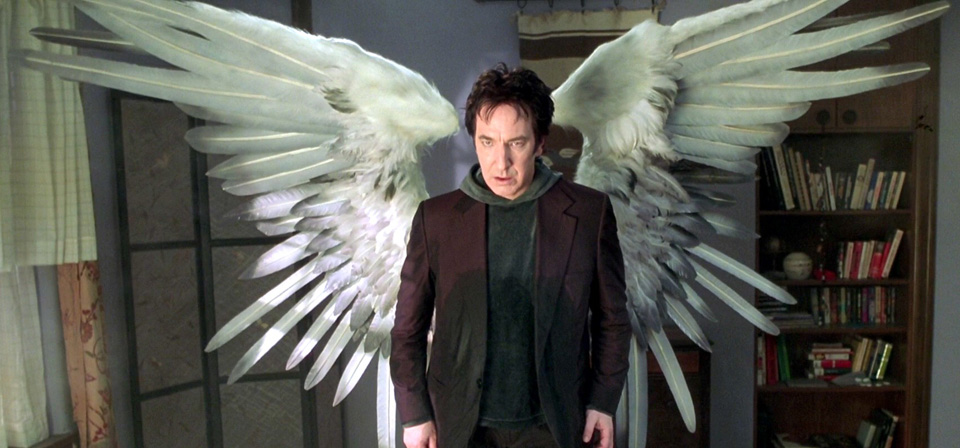
Dogma in Dogma: A Theological Guide
From a religious point of view, Kevin Smith’s Dogma comes a lot closer to making sense if you just accept one premise: The angels in it — fallen and otherwise — are all really bad at theology.
The Star Wars Films: Moral and Spiritual Issues
(Written by Jimmy Akin) Moral and spiritual issues raised by the Star Wars phenomenon range from the problem of where to draw the line on Star Wars tie-in products all the way to the theological problems associated with the concept of "the Force."
Nickelodeon’s “Hey Arnold!” Series is Good Television
(Written by Jimmy Akin) "Hey Arnold!" — the television series — is different. It manages to keep its low-key, kid-friendly tone while still turning in episodes that are entertaining and even witty.
Open Letter to a Mother at an R-rated Movie
Open letter to the mother sitting in front of me at last week’s Cradle 2 the Grave screening: Your daughter seemed to be about 8 years old, with her white dress and her hair done up in braids. I wonder what she thought when the people in this
Don’t Get Left Behind
Still others, trying to strike a happy medium, opt for a tolerant ecumenical openness to various interpretations. "Pray for ’pre’ but prepare for ’post,’ " advised Fundamentalist singer Keith Green when asked about his views on the timing of the rapture and the tribulation. Many likewise feel that the interpretation of end-times prophecy is an inessential matter regarding which Christians may legitimately hold different views. (Incidentally, if you’re already having trouble with terms like "pre" and "post," try this summary to get up to speed.)
Recent
- American Martyr: An Oklahoma priest’s unlikely bond with persecuted Mayans in war-torn Guatemala
- Father Stanley Rother’s gift of presence: Interview with María Ruiz Scaperlanda
- The Odyssey and the consequences of war
- Why Doctor Strange is the best MCU movie: 10 reasons
- Aliens, humanity, and God: In Disclosure Day, Spielberg still wants to believe
Home Video
Copyright © 2000– Steven D. Greydanus. All rights reserved.