Articles
Becket Back on the Big Screen
It’s a classic. It’s beloved, if for decades only on VHS. It’s got big stars, terrific performances, witty dialogue. Its blend of sex, spectacle and spirituality surpasses anything Cecil B. DeMille ever attempted. So why has Becket never been restored and brought to DVD in the style it richly deserves?
Must-see DVDs of 2006
When you walk into an average DVD store, “New Releases” dominate the displays. “New Releases,” of course, are generally the movies that played in theaters in the last six to twenty-four months or so. Yet in fact every year many of the most exciting new DVD releases are movies that haven’t played in theaters in years, decades — or even longer.
2006: The year in reviews
It was a grim year at the movies — literally. War, death, dystopia, and other dark and downbeat subjects filled theater screens in 2006. Jeffrey Overstreet (Looking Closer) called it “the year of the nightmare.”
“Father Brown”: The ATV Series Now on DVD
Thirteen classic Father Brown stories — adapted with gratifying fidelity in the 1974 television series starring Kenneth More — are now available on DVD in a pair of two-disc box sets.
The Nativity Story and Catholic Teaching
In blogs, discussion boards, and other fora, a range of criticisms and objections concerning The Nativity Story have been raised by concerned Catholics. Some of these critiques are thoughtful and worthy of consideration, and raise issues regarding the film that have merit, or are at least defensible. Other complaints are more problematic, resting on misrepresentations of the film or even of Catholic teaching.
Christmas Story: Catherine Hardwicke and Mike Rich Discuss Bringing The Nativity Story to the Screen
Perhaps The Nativity Story will take its place as the missing Christmas film — the one that actually is about the real “real meaning of Christmas.”
St. Joseph Gets His Due: The Nativity Story Through the Eyes of Jesus’ Foster Father
Although The Nativity Story doesn’t portray Joseph as a widower, it also doesn’t depict Joseph and Mary’s relationship as a typical first-century Jewish courtship. While the film doesn’t take a stance one way or the other on the Catholic doctrine of Mary’s perpetual virginity, it finds drama in the obstacles between Joseph and Mary, rather than turning their story, as some retellings have done, into a Hollywood romance.
2005: The year in reviews
Like a lot of moviegoers, I spent a fair bit of time this year wringing my hands over the quality of the movies. Looking back, though, it seems to me that the family-film pattern mirrors the overall year: a dearth of A-level films, perhaps, but a bumper crop of B-pluses.
Stories of Karol: Telling the life of a man who became pope
Karol: A Man Who Became Pope isn’t the first TV movie on the life of Karol Wojtyla, the future Pope John Paul II — but among the new crop of Pope movies coming in the wake of the Holy Father’s death, it’s not only the first, but also the only one seen and praised both by Benedict XVI and John Paul II himself.
Narnia Filmmakers Hype the Fantasy, Hedge the Faith
A lot of thought and effort went into getting the feel, the look, the period and the characters of C. S. Lewis’s beloved fairy tale The Lion, the Witch and the Wardrobe right for the screen… At the same time, judging from the unanimous testimony of the filmmakers, one crucial element of the book was not a consideration one way or the other in adapting the story: its religious significance.
Into the Wardrobe: Bringing Narnia to Life
Before there are centaurs, fauns, or even a lamp-post incongruously burning in the middle of nowhere to establish that the forest beyond the wardrobe door is no ordinary wood, Andrew Adamson’s The Lion, the Witch and the Wardrobe creates the magic of the wood and the wardrobe with the enchantment on the face of young Georgie Henley, who plays Lucy Pevensie, as she gets her first glimpse of the Narnian wood.
The Harold Lloyd Comedy Collection
For fans of silent comedy, it’s the DVD event of the decade: Harold Lloyd, the “Third Genius” of silent comedy (Chaplin and Keaton being the other two), until now almost totally unavailable on DVD, at last enters the modern home-video age in grand style with the The Harold Lloyd Comedy Collection.
A Nice Guy Finishes First
The Greatest Game Ever Played, starring Shia LaBeouf (Holes, Constantine) and directed by Bill Paxton from a screenplay by Mark Frost adapting his own best-selling book, isn’t just the true story of a dramatic championship playoff. It’s also the story of a revolution in popular culture, of how a poor, unassuming youth helped democratize the most aristocratic of games, transforming golf from the exclusive domain of private clubs and wealthy elites to a popular middle-class pastime played on public courses.
The Exorcism of Emily Rose: Scott Derrickson, Paul Harris Boardman, Laura Linney, Jennifer Carpenter
There are no scenes of spinning heads, projectile pea-soup vomiting, or levitating beds in The Exorcism of Emily Rose (opening September 9), starring Laura Linney, Tom Wilkinson, Jennifer Carpenter, and Campbell Scott.
“I have a hard time making any decision whatsoever”
For German filmmaker Volker Schlöndorff, the appeal of making The Ninth Day, a fact-inspired film about a priest in a Nazi concentration camp who is briefly released, goes back over five decades to Schlöndorff’s film-club days at a Jesuit boarding school, where he first encountered Carl Dreyer’s silent masterpiece, The Passion of Joan of Arc.
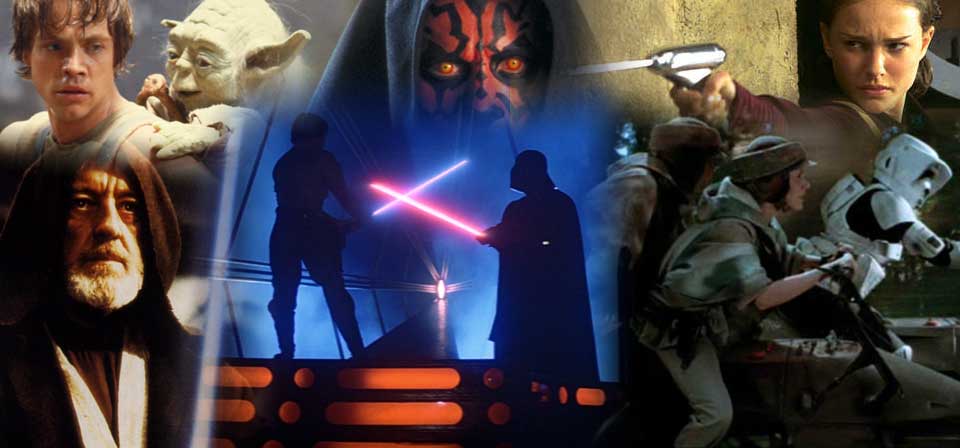
An American mythology: Why Star Wars still matters
Star Wars is pop mythology — a "McMyth," as a recent critical article put it — but in our McCulture even a McMyth can be vastly preferable to no myth at all, and certainly to other, less wholesome mythologies (e.g., the Matrix trilogy). Even for those who generally prefer more traditional fare, there is still much to enjoy and appreciate in these half-baked, stunningly mounted fantasies of good and evil in a galaxy far, far away.
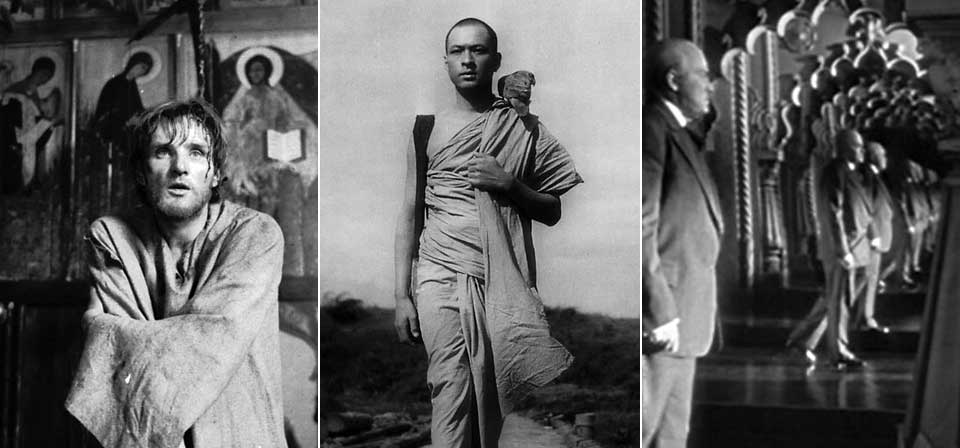
The Vatican Film List
The pope’s remarks were both forward looking, speaking to the potential of cinema to become “a more and more positive factor in the development of individuals and a stimulus for the conscience of society as a whole,” and also historically minded, speaking positively of the praiseworthy contributions of “many worthwhile productions during the first hundred years of [the cinema’s] existence.”
2004: The year in reviews
Did anything worth caring about come to cineplex screens? Anything anyone will be talking about or revisiting five or ten years from now?
Triple Threat: Fox’s Spring 2005 Family Film Lineup
Typically, the spring movie season has at most one decent film for family audiences. Last year it was Two Brothers; offerings from previous years included Holes (2003), Ice Age (2002), Spy Kids (2001), and The Emperor’s New Groove (2000).
2003: The year in reviews
It was a rough year at the movies for the Catholic Church.
Recent
- American Martyr: An Oklahoma priest’s unlikely bond with persecuted Mayans in war-torn Guatemala
- Father Stanley Rother’s gift of presence: Interview with María Ruiz Scaperlanda
- The Odyssey and the consequences of war
- Why Doctor Strange is the best MCU movie: 10 reasons
- Aliens, humanity, and God: In Disclosure Day, Spielberg still wants to believe
Home Video
Copyright © 2000– Steven D. Greydanus. All rights reserved.