Articles
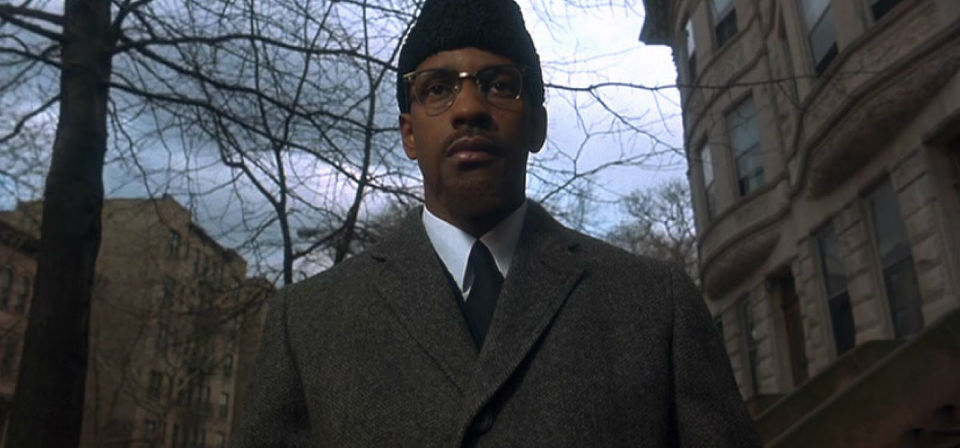
Good Denzel, bad Denzel: Malcolm X
Lee has called Malcolm X the movie he was born to make; in some respects it may be the role Washington was born to play.

The subversive non-subversiveness of “Phineas and Ferb”
There are at least a half dozen reasons “Phineas and Ferb” never should have existed, and how fortunate for viewers of all ages that it does.

Is Star Wars Gnostic?
Is the Star Wars mythos Gnostic? If so, how Gnostic is it? The question is complicated by confusion over exactly what Gnosticism is.

The myth and magic of Star Wars:
Is it over?
By the most empirical of measures, it doesn’t look like anything can kill Star Wars. From another angle, one could equally ask: At this late date, can anything revive Star Wars?
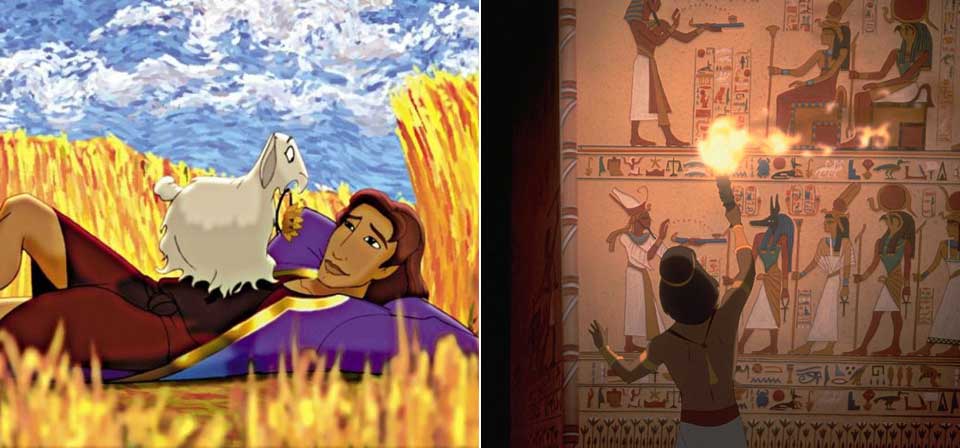
DreamWorks’ animated Torah
During the second week of Advent, as we’re wrapping up Genesis and turning to Exodus, our family viewing often includes DreamWorks’ two animated Pentateuch movies: the Exodus movie The Prince of Egypt and its made-for-TV prequel, Joseph: King of Dreams.

The down-to-earth comic genius of Harold Lloyd
Due to the vagaries of history, Lloyd is less well-known today than Chaplin or Keaton, but his legacy lives on. If you’ve seen Back to the Future (1985), Bringing Up Baby (1938), any of Jackie Chan’s movies, or any incarnation of Superman or Harry Potter, or you’ve experienced Lloyd’s influence.

Thanksgiving leftovers: Pieces of April
Pieces of April is about the danger, and the necessity, of hoping against hope in a troubled situation, of taking the risk of trying to make it work when there is ample reason to foresee failure.

Can Muslims and Christians coexist? Of Gods and Men
Of Gods and Men is the most extraordinary cinematic depiction of the Christian ideal in at least the last quarter century. It also depicts something of the variety of expressions in the Islamic world.
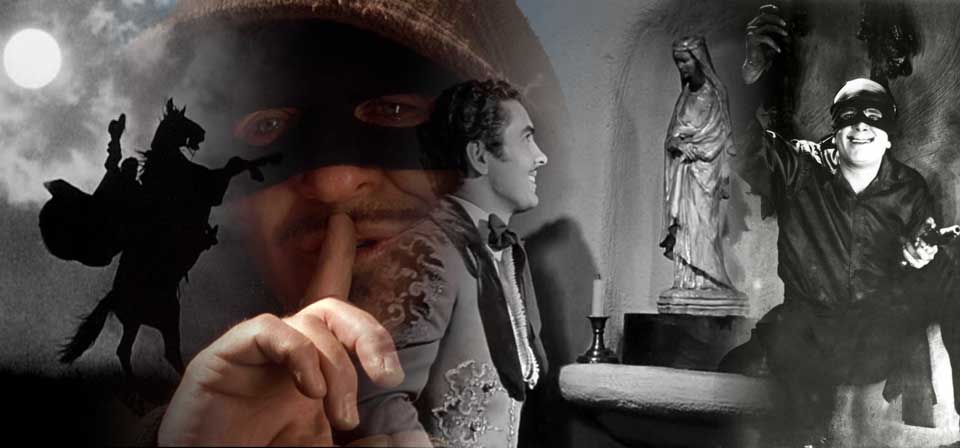
Zorro: Before Daredevil or Nightcrawler, the first superhero ever was Catholic
“He has been many different men,” Antonio Banderas tells Catherine Zeta-Jones in the last scene of the rousing 1998 action movie The Mask of Zorro.

Catholic deacon whose drilling company helped rescue The 33: “God drilled that hole”
Hall doesn’t want credit; as far as he’s concerned, the rescue was God’s work, not his.
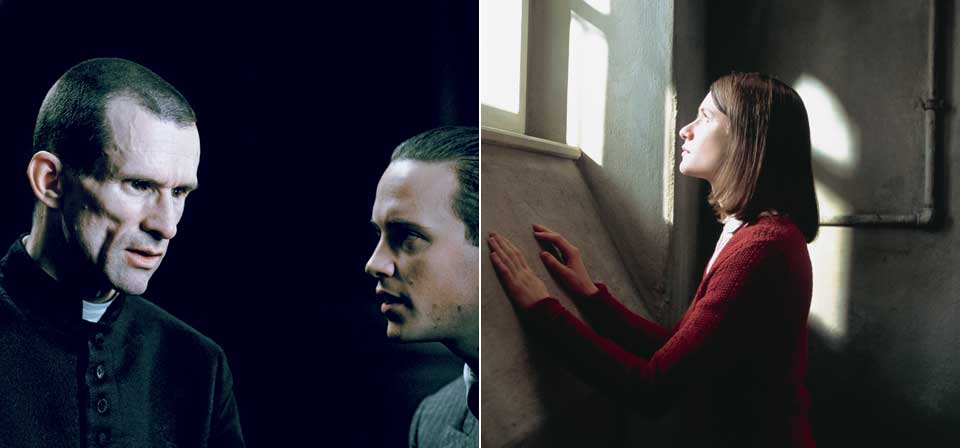
The priest, the student, and the swastika
Both films revolve around a number of tense cat-and-mouse interviews between the believing protagonist and a shrewd Nazi antagonist … The interviews in both films are a clash of worldviews.
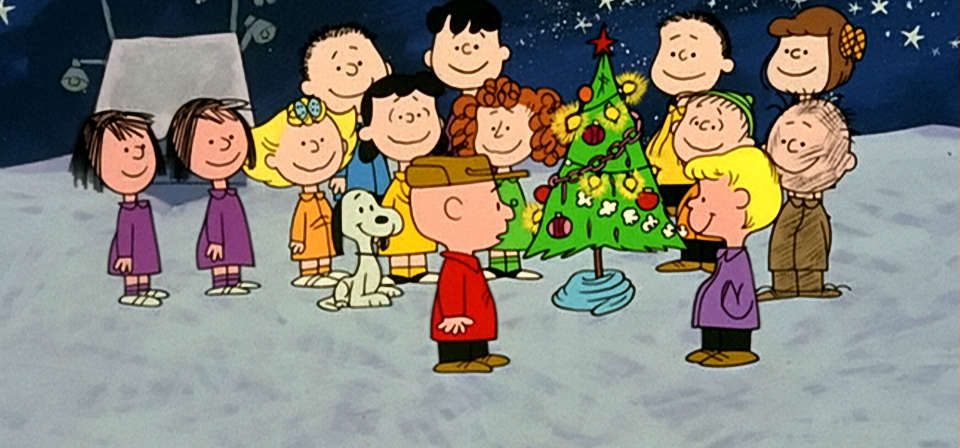
You’re an institution, Charlie Brown
“Peanuts”’ appeal was universal: It was beloved by young and old, by the intelligentsia as well as the masses; it was the definition of mainstream, yet it was also embraced by the counterculture. It was bitterly pessimistic, yet never succumbed to the despair and nihilism of, say, “Dilbert” or “Pearls Before Swine.”
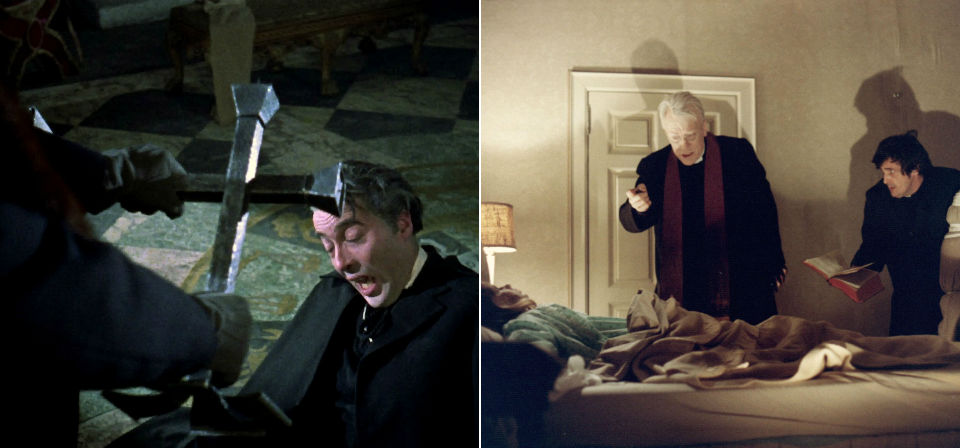
Vampires, demons and the cross: Catholicism and horror
“When it comes to fighting vampires and performing exorcisms, the Roman Catholic Church has the heavy artillery” is how Roger Ebert opened his review of John Carpenter’s Vampires.

Looking back at Back to the Future
If the early scenes with Marty’s mother suggest that parents sometimes try to hold their children to a standard they never tried to meet themselves, the parking scene suggests that the reverse may also be the case: Children may want their parents to embody a higher standard than they want for themselves.

Bending the air: Defying gravity in “Avatar,” Star Wars, Miyazaki and more
There is a sense in which “Avatar: The Last Airbender” is for my children in part what Star Wars was for my generation: a new and enthralling mythology about a young hero with a mysterious power slowly learning to channel that power to fight against a tyrannical empire.
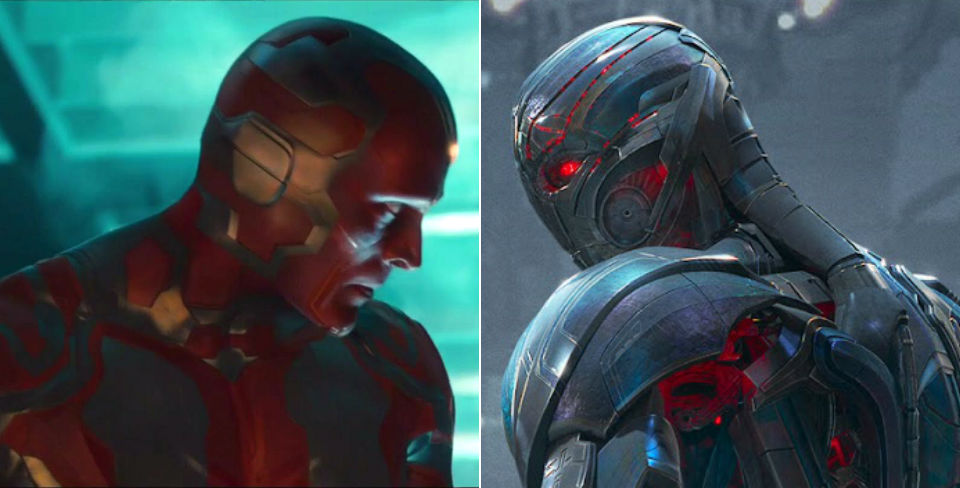
The theology and philosophy of Avengers: Age of Ultron
We aren’t exactly talking The Matrix here, but it’s been awhile since a Hollywood popcorn action movie elicited such a range of theological and philosophical analysis.
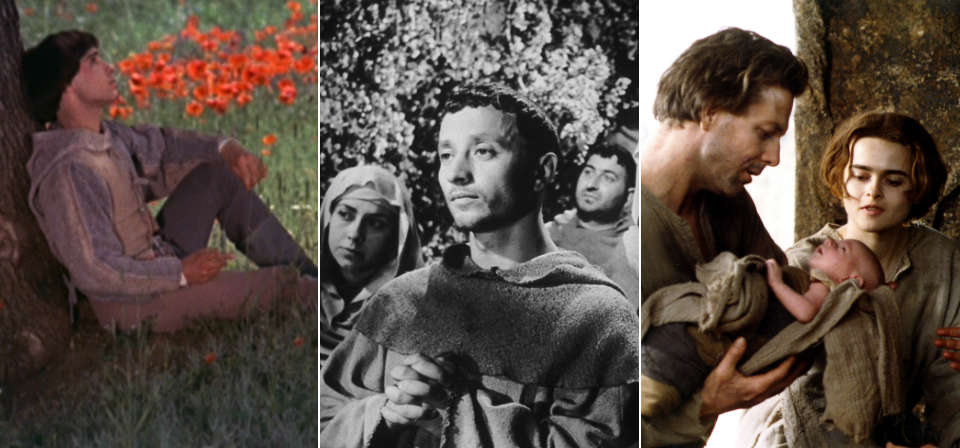
“Franciscan” movies for Pope Francis’ US visit
Much like Pope Francis himself at times — or even like Jesus himself — Saint Francis of Assisi has often been made into an avatar or mascot of people’s likes (or dislikes) rather than being recognized as the surprising, vibrant figure he really was.

How James Bond lost his soul: Casino Royale
Casino is more than a reboot: It’s also a kind of origin story, based on the first Ian Fleming novel. As such, it’s the story of how James Bond lost his soul, or whatever was left of it, at the very moment when he dared to hope for redemption.
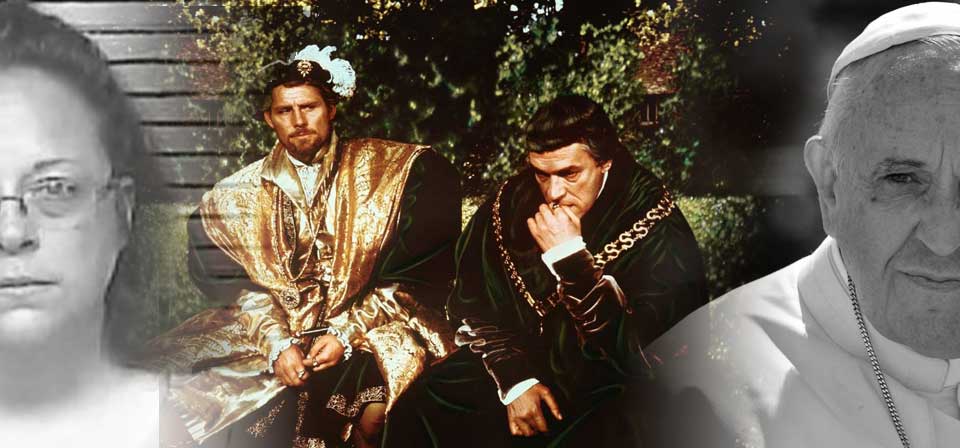
The taking of an oath: Marriage, annulments, Kim Davis, and A Man for All Seasons
The name of Saint Thomas More has cropped up in recent discussion of current events as never since — well, if not since the English Reformation, at any rate probably since one of my all-time favorite films, A Man for All Seasons, won six Academy Awards at the 1966 Oscars, including Best Picture, Best Director (Fred Zinnemann), and Best Actor (Paul Scofield).

“Brother Ass” or “stupid apes”? Transhumanism, the Imago Dei and Hollywood
As technology progresses and the culture and the Gospel continue to draw further apart, transhumanist aspirations flourish, both as a worldview and in the world of popular culture.
Recent
- American Martyr: An Oklahoma priest’s unlikely bond with persecuted Mayans in war-torn Guatemala
- Father Stanley Rother’s gift of presence: Interview with María Ruiz Scaperlanda
- The Odyssey and the consequences of war
- Why Doctor Strange is the best MCU movie: 10 reasons
- Aliens, humanity, and God: In Disclosure Day, Spielberg still wants to believe
Home Video
Copyright © 2000– Steven D. Greydanus. All rights reserved.